Friday, February 4, 2022

Book Musing: "The Good Neighbor: The Life and Work of Fred Rogers" by Maxwell King


I’ve decided to try something a little different with my book reviews on this blog. My goal is to develop more of an essay based on reading a book that offers more information and side references. I’m thinking of it as a combination monthly book report and ramblings or musings inspired by the book. I hope you’ll find it interesting.

Book Musing

The Good Neighbor: The Life and Work of Fred Rogers 

by Maxwell King

Over the winter holidays, I watched the Tom Hanks movie on Mr. Rogers, A Beautiful Day in the Neighborhood. I was expecting a straight forward docudrama of his life, but the movie begins with a journalist who is having a rough time in his own life and is assigned to interview Mr. Rogers for a very short piece. In his insightful way, Rogers asks him questions that he hadn’t even thought about asking himself. We learn about Fred Rogers through the eyes of the journalist.

That movie was inspired by Tom Junod, and an article he wrote for Esquire magazine back in 1998, which you can find online. He also wrote an article on Mr. Rogers for The Atlantic in December of 2019 that I found beautiful and even more relevant. (You don’t have to be a member to read it, they allow a few views each month from non-subscribers.)

https://www.theatlantic.com/magazine/archive/2019/12/what-would-mister-rogers-do/600772/

In it, Junod laments what he sees as the failure of our world to embrace and actually live out what Mr. Rogers tried to teach people throughout his life.

“Fred Rogers never—ever—let the urgency of work or life impede his focus on what he saw as basic human values: integrity, respect, responsibility, fairness and compassion, and of course his signature value, kindness.” (The Good Neighbor)

I well understand Junod's critique of our society. Perhaps we have failed as a collective, but if one person carries the torch, then it’s not really lost. You can judge people harshly as a group, but the truth is that we all fail in big and small ways at least some of the time. The point isn’t our failure, it’s that we keep striving — trying to be better, to be kinder, to live our convictions. Of course, that means figuring out what they are. That’s where people like Mr. Rogers, and his legacy, come in.

 “You rarely have time for everything you want in this life, so you need to make choices. And hopefully your choices can come from a deep sense of who you are.” – Fred Rogers

The Good Neighbor demonstrates that Fred Rogers knew what he believed at his core and he used those guiding principles to create something of lasting value and significance. One of his core convictions was being kind, and it led him to be open to people and ideas that others often weren’t at that time. (And sometimes still aren’t today.)

In fact, while he worked on a show called The Children’s Corner, he enrolled in Pittsburgh Theological Seminary and, even though he became a Presbyterian minister, he never stopped learning about and from many different religions and types of  spirituality.

There have been quite a few books written about Fred Rogers, some with particular emphasis on some aspect of who he was or his work. This book offers a multitude of stories to give the reader a well-rounded view of what Rogers was like – his deep ethical guiding beliefs, his playful sense of humor, and even his fallibility.

This is a slow read, just as Mr. Rogers slowed down when he talked to his audience. People have often said that watching Mr. Rogers gives them a warm feeling, and The Good Neighbor did the same for me. It is inspirational.

I grew up in front of the TV— Sesame Street, Romper Room, Captain Kangaroo, but I don’t have specific memories of the shows. My appreciation of Mr. Rogers is more a feeling, and now it’s more inspired by my appreciation of his work as a fellow educator.

Most of us know Mr. Rogers from his successful show on PBS during the 70s and 80s, or maybe even only from clips, or mostly from the recent movie. But I learned in The Good Neighbor that there were actually several programs that had Fred Rogers as the guiding force over the years — before, during, and after that famous show.

Rogers had a program on WQED outside Pittsburgh called The Children’s Corner. He did the music and puppets while Josie Carey was the on air personality. Then he went to CBC in Canada and they created Misteroger’s Neighborhood. Here he was actually on the screen too.

During Misterogers’ Neighborhood, the managers of the television station set up a meet-and-greet. They expected 500, but got 5,000 kids. This was the incredible appeal of Fred Rogers.

Finally, he came home to Pittsburgh and back to WQED to create Mister Roger’s Neighborhood - half an hour a day, five days a week, funded by Sears, it debuted February 19, 1968. There were 180 episodes just in season one alone.

“While communication technology proliferated, becoming ever faster and more complex, Fred Rogers used it in ways that were slow, thoughtful, and nuanced.” (The Good Neighbor)

One of the things that I learned from this book was that Fred Rogers was a musician and responsible for most of the songs from the show, plus little operas that he created. He worked with a live band that provided all the musical accompaniment that you hear on the show. In fact, when he was angry or frustrated, he would go over to the piano on the set to let out his feelings.

This book takes us from Rogers’ childhood in Latrobe, Pennsylvania as a chubby and asthmatic child, through his schooling years, his marriage, his various career choices, through his final illness, and even into his legacy.

Part of the book is family history – who Fred was born to and how he was a product of that time and place. (I fell down a little rabbit hole here when it mentioned that part of Fred’s family were Scots-Irish and came from Northern Ireland. My own great X 5 grandmother came from Ennis Killen. I found myself wondering if they came from similar people. I went into our library’s Heritage Quest database and tracked down the Federal census for 1840 to 1880. Though I didn’t go so far as to look for connections between the two families, I did learn more about my own family.)

The section on how Fred’s family were captains of industry in Latrobe and felt a strong responsibility to care for the families that worked for them reminded me very much of the stories I grew up with of George F. Johnson and the Endicott Johnson shoe factory where my grandparents worked in Johnson City, New York. Then I turned the page and found the author discussing that very thing, referring to George F. Johnson by name.

A formative aspect of Fred’s life was how he was bullied as a child, for his weight, his asthma, and his parents’ wealth. He was told to act like he didn’t care, but that’s hard to do when you do care.

“As he grew older, Rogers struggled to work out a set of responses to the challenges of life that could turn his caring, his belief in love, and his great sensitivity into a life course based not on fragility, but on a quiet strength. He found a way to be true to himself that enabled him to build a uniquely thoughtful set of defenses that relied on empathy and sympathy. Ultimately, he developed a powerful authenticity….” (The Good Neighbor)

Maxfield is careful to give us all the relevant details to understand the time and place that Rogers grew up in, the family dynamics, and later the relationships that were instrumental in giving Rogers the opportunities that led to his success in television.

The behind the scenes information on the early show is fascinating, such as how the puppet Daniel Tiger was named for Dorothy Daniel, a manager on the early show, in part because she actually gave Fred the tiger puppet that he used.

The Good Neighbor touches on all the facets of Rogers’ life - the music, the puppets, the shows, the spirituality, his marriage and his children, his beliefs, and his strict way of creating something that would be accessible to kids and help them. The many examples of letters sent to Mr. Rogers, and his responses, are illuminating.

There are many, many little stories in the book that demonstrate who he was. How he fell over laughing when one of the stage hands appeared naked in a closet during filming, or how he would express himself in the voice of one of his puppet characters if he wasn’t quite comfortable saying something. Or how he would use those puppets to talk to people in a way that made them more comfortable.

This book must have been a monumental undertaking to write, and something of a mission — so many details, right down to what he had on his bookshelf in his Pittsburgh apartment. Many people are thanked in the notes at the end for all they contributed to this compendium of Fred Roger’s life, and the footnotes go on for pages.

In 1969, Fred Rogers testified before the Senate Subcommittee on Communications. President Johnson had proposed 20 million for the Corporation for Public Broadcasting but Nixon wanted to cut funding because of the Vietnam war. Fred Rogers was just 41 years old at the time.

https://www.youtube.com/watch?v=fKy7ljRr0AA – Fred Rogers’ testimony

On the recommendation of a couple friends, I watched the testimony, it’s only six or seven minutes long. It was good, interesting, but it wasn’t until I read the part of the book about it that I really understood it – the tone of the room, the different people and their relevance, the significance of how Rogers handled it and the outcome.

Rogers had a real impact on more than one generation of people and from many walks of life. I was surprised and pleased to learn that several of the programs I have enjoyed with my own daughter — Peg + Cat, Odd Squad, and Daniel Tiger’s Neighborhood — were produced by Fred Rogers Company.

After reading this book, I am now, more than ever, inspired by who Fred Rogers was and what he did with his life.

A special quote for my writer’s group, and other writers, from a note Fred Rogers wrote to himself in 1979—

“Am I kidding myself that I’m able to write a script again? Am I really just whistling Dixie? I wonder. Why don’t I trust myself? Really that’s what it’s all about  . . . that and not wanting to go through the agony of creation. AFTER ALL THESE YEARS, IT’S JUST AS BAD AS EVER. I wonder if every creative artist goes through the tortures of the damned trying to create? GET TO IT, FRED! But don’t let anybody ever tell anybody else that it was easy. It wasn’t.” (The Good Neighbor)


Friday, January 7, 2022

Book Review: The Invisible Life of Addie LaRue by V. E. Schwab


The Invisible Life of Addie LaRue

By V.E. Schwab

Reviewed by Michelle Wells

Just a quick note to say that this review marks a change for the blog. I’ve decided to only write one review a month so that I won’t be so rushed in my reading and can do a more in depth review of the books. New reviews will be put up on the first Friday of the month and cover whatever I happen to be reading at the moment. I jump between genres with wild abandon. I apologize if that confuses anyone.

Why did I pick this book up? A friend raved about the writing and I needed something that I could sink my teeth into, something that would sweep me up in a story. This book did that fairly well.

The Invisible Life of Addie LaRue covers several hundred years and begins with a young woman being coerced to marry, “for the good of the village.” It is 1714 in Villon-sur-Sarthe, France. Addie does not want to marry and runs to the woods on the eve of her marriage to pray for deliverance, but Estele has warned her to beware the gods that answer after dark. The god, or devil, that answers Addie’s prayer demands a price. Even in her fear, Addie makes a bargain that at once frees her and damns her.

She is freed from the marriage, and all constraints of obligation, but now no one recognizes her, or remembers her once they have left her presence. Though it takes her time to learn the limits of this new life, Addie figures out ways to survive, and eventually to thrive and enjoy the beauty of art and life. She even figures out how to leave a mark on history.

While the story touches upon various major events in history during the time period covered, it is largely a glancing blow as the story focuses upon Addie, and her relationships with the god/devil she calls Luc, and other people she interacts with, most notably musicians and artists.

In looking back at the story, I was surprised at how early Henry Strauss is introduced. I thought it was much farther into the book, perhaps because he's a very average character, until we find that he can remember Addie. He runs a book store and she tries to steal a book, but it doesn't go down quite the way she expects.

The timeline is a little shallow, like a stone skimming across a pond through many jumps until it sinks in the end, though I did enjoy the ride. “Ooo, I recognize that, and oh, hey, yeah, I recognize that.”

I really wasn’t sure precisely where this was going, right until the final pages, so that is always a plus in my estimation. Things changed directions a bit several times throughout the book, and more often toward the end. I was very concerned at one point that it was turning into one of those books that extolls the virtues of an abusive relationship under the guise of romance, but thankfully that did not turn out to be the case.

Did it develop any deeper themes? Mainly that there is beauty to be found in life in between the pain.

The concept was intriguing, the settings lovely, and nicely described, but the book could have been condensed and not lost anything. Her interaction with her old friend Estele, after her pact with the devil, is echoed by her interaction with her friend Isabelle, without any useful addition. Fewer scenes included but developed more fully might have provided a richer reading experience.

The writing style drew me in and carried me along easily, but it was a long, slow, drawn-out ride. Is this zen or shallow? Addie can’t have any possessions or even leave a mark – with pencil or other tools. It almost forces her into a shallow life. There are mentions of more – trying to save people in World War II and a time of madness, but they aren’t drawn in any depth. It’s still always in relation to her and her relationships, just a framework.

Schwab is a prolific author, 20 books in under 10 years, with a Bachelor of Fine Arts which plays into this story through her use of art works to give Addie a presence in history. Various artists are inspired by her, though they cannot capture her directly. Bea, an art student and friend of Henry’s, notices the similarities in the art works and considers it for a thesis project. I loved this frame of the story, perhaps because of my own college experience. It was easily recognizable and gave me a tangible way into the story.

I listened to a lot of the book on audio and the narrator is quite excellent, bringing to life the French accent and the changing nature of it as Addie gradually loses it. Her male voices were believable too. Without such wonderful narration, I’m not sure I would have enjoyed it quite as much as I did.

The most important thing in a book is to tell a good story. I was entertained. Is it a book that is going to stick with me? I suspect not. Did it offer any revelatory thoughts or inspire me to new thoughts? No.

3.5 out of 5 stars.


Thursday, December 16, 2021

Storymusing - New Format for Book Reviews


Hi Folks - 

I've decided to cut back on my reviewing in and just review one book a month, on the first Friday of the month. That way I can go more in depth in my thinking on a particular topic. The next book review will be for Breakfast at Tiffany's by Truman Capote and will be posted on January 7th of 2022. I hope you'll join me for a look at the story and maybe some side notes of interest. 

Thanks!

Friday, December 10, 2021

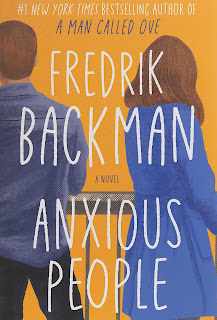
Book Review: Anxious People by Fredrik Backman


Anxious People

by Fredrik Backman

Our thematic book club chose a “Nordic” theme for December. To be honest, I had to look up what that might encompass. Merriam-Webster defines Nordic as “1 : a native of northern Europe. 2 : a person of Nordic physical type. 3 : a member of the peoples of Scandinavia.”

Aha. One of the best books I’ve read in the past decade was A Man Called Ove by Frederik Backman, who is Swedish. My husband and I both loved that story. I knew he had written a number of other books that I hadn’t read yet so I checked my digital catalogs to see what might be available. Anxious People looked popular and very interesting so I placed a hold.

Apparently people were impatient and bought it instead because it soon became available as both an ebook and a digital book.

From the very first, I was drawn into the story.

The story opens with a police interview between a young officer and a slightly irritating real estate agent. (She really does seem very silly.) We focus more on the officer, and the other officer who he is working with, which turns out to be his father.

The real estate agent was part of a group of people held hostage by a bank robber. Seems a straight forward statement.

“Shortly after that the police stormed the apartment, only to discover that it was empty. The door to the balcony was locked, all the windows were closed, and there were no other exits.”

Then you get to know all the other characters that were there.

“…it’s always very easy to declare that other people are idiots, but only if you forget how idiotically difficult being human is. Especially if you have other people you’re trying to be a reasonably good human being for.”

It’s about relationships, being human, being a parent, having the weight of caring for your children and other people on your shoulders,

It’s beautiful and funny and very relatable, and utterly silly and absurd at times.

“We don’t have a plan, we just do our best to get through the day, because there’ll be another one coming along tomorrow.”

I soon felt like I was driving along a mountain with a crazy number of switchbacks. Just when you got up a head of steam, something changed and your whole view of the story changed with it. I love that kind of thing. There are layers upon layers revealed, depending upon perspective, and some obfuscations. Backman comes at the story from different angles, picking up the thread of one person’s involvement, then another, then ties them together in ways you might not ever expect.

As soon as I finished reading this book, I wanted to go back and read it again, to highlight all the wonderful turns of phrase and ideas that tugged at me to share with you. But if I shared them all here, then the review would be far too long and they would be totally out of context.

I highly, highly recommend this story. I don’t think you’ll be disappointed.


Friday, December 3, 2021

Book Review: The Lost Apothecary by Sarah Penner


The Lost Apothecary Shop

by Sarah Penner

Okay, okay, this one was a pretty cover pick again. The title was intriguing as well.

Told from the perspectives of three different people, the story opens with Nella, an apothecary whose shop is dedicated to women, in 1791 London. But the shop doesn’t just dispense the usual remedies. Behind a hidden wall lies a whole other dispensary, one of poisons. Nella uses these poisons to get women justice, and vengeance. Women put their requests in notes, in a barrel of barley, and Nella prepares the requested item for them.

Caroline is a modern woman with a problem of her own, a husband who has cheated on her while he is supposedly working long hours at the office. She arrives in London on her anniversary trip, without her husband, though he follows soon after. Part of her goal is to sort out her anger and whether it’s worth trying to make her marriage work. Complicating things is her concern that she might, finally, be pregnant.

Drawn into a “mud larking” afternoon, Caroline discovers an old apothecary bottle that leads her to research Nella and her shop, and its’ secrets.

Eliza is our third character, a young girl just coming of age, who is sent to Nella’s shop by her mistress for a poison to stop the lecherous advances of her master. She’s a very intelligent girl but somewhat imaginative and superstitious. She is fascinated by Nella’s shop and returns there when she has some troubles of her own.

The fates of the three women have some parallels but they are very thoroughly unique characters. The setting is richly detailed with historical details. The plot is intricate and the pace grows quicker as the story progresses. This is one that kept me up late to finish it. I highly recommend.


Friday, November 26, 2021

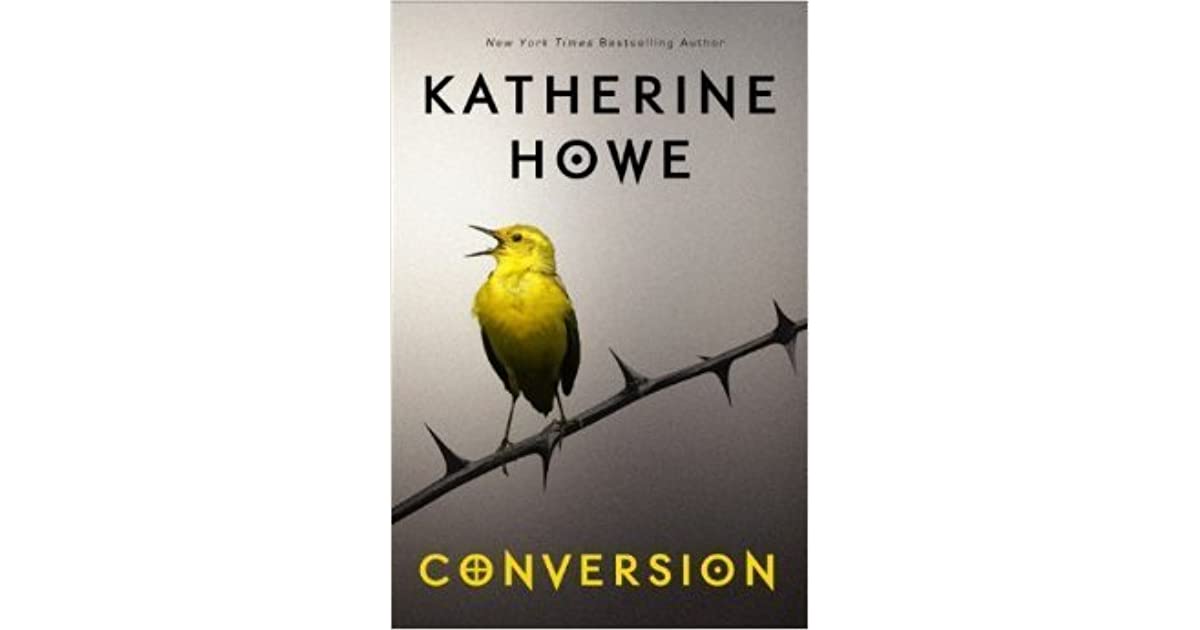
Book Review: Conversion by Katherine Howe


Conversion

by Katherine Howe

Did you know that Danvers, Massachusetts is the village once known as Salem Village?  Salem Village, the site of the Salem witch trials and executions, was renamed Danvers in 1757.

For all of the witchy history, there is very little that seems supernatural in this story until very late in the book. Until then, it is a young adult historical fiction told from the perspective of Colleen, a senior student at the Catholic St. Joan’s school. Interspersed are chapters told from the perspective of Ann Putnam, about ten years after the Salem witch trials, as she confesses to a preacher her part in creating the hysteria by falsely accusing women, caught up in the mania.

I found some parallels between the historical story line and the modern story line, but not as many as I would have liked to see. I think it would have been stronger if she tied the two together a bit more.

It’s an intriguing read. Some of the characterization was good, but some of Colleen’s friends, and her classmates, were a bit one dimensional. The history is the strong point, definitely. For all that happens and how it draws you along, it’s a bit of a slow book. There were some scenes that could have been eliminated to tighten up the pace.

Over all, I enjoyed this book, particularly the dramatized audio reading, but I would say I have liked the other books by this author more. If you’re going to start with something by this author, I would head straight for The Physick Book of Deliverance Dane or the YA The Appearance of Annie Van Sinderen.


Friday, November 19, 2021

Book Review: Some Things I Still Can't Tell You: Poems by Misha Collins


Some Things I Still Can’t Tell You: Poems

by Misha Collins


There is something very intimate about this collection of poems. The moments captured and shared are sometimes very personal, important to the poet. Presumably, that is what made them worth preserving. Others are more universal, and yet still strangely intimate. The back of the book speaks of his trademark “piercing vulnerability.” I think vulnerability is a very apt phrase for this collection.

There are moments in our lives that are important only to us, we all have them. Translating them into something worth pondering for others takes interpretation. I found an exploration of the world and life as a theme that I could very much relate to.

I tend toward eschewing rules when it comes to poetry so I couldn’t tell you if Collins breaks them. I’m unsure of many rules when it comes to poetry. (For example, I’ve received a critique that I rhyme when I shouldn’t, though I don’t set out to rhyme.) I understand meter but have much more trouble recognizing stress and unstressed syllables. I prefer to punctuate and capitalize as if writing a sentence, but Collins capitalizes each line. I found that mildly annoying at first but, much like reading the lack of punctuation in Kent Haruf’s writing, I soon adapted to it.

Collins covers a lot of ground, grouped into poems on Love / Hope, joy, running & other good things / Longing, sadness, running & foreboding / My people (& other people) / The parents /  The kids. But the poems often feel incredibly disparate, snapshots, rather than a running continuity as some collections do. They cover a wide span of years, with a sort of timelessness that leaves the reader wondering when something occurred in his life.

The cover is a lovely eagle’s eye view of a city scape at night, the points of light between the lighter and deeper blue of the sky, and the dark of the foreground below. The words are given an ombré effect as they fade a little into the city scape. A lovely cover.

I was surprised that the author worked in the White House and at NPR headquarters before beginning his acting career, which is where I knew him from best, for his role as the Angel Castiel in Supernatural.

A very enjoyable collection to ponder over a cup of coffee.