Showing posts with label Historical fiction. Show all posts

Friday, January 7, 2022

Book Review: The Invisible Life of Addie LaRue by V. E. Schwab


The Invisible Life of Addie LaRue

By V.E. Schwab

Reviewed by Michelle Wells

Just a quick note to say that this review marks a change for the blog. I’ve decided to only write one review a month so that I won’t be so rushed in my reading and can do a more in depth review of the books. New reviews will be put up on the first Friday of the month and cover whatever I happen to be reading at the moment. I jump between genres with wild abandon. I apologize if that confuses anyone.

Why did I pick this book up? A friend raved about the writing and I needed something that I could sink my teeth into, something that would sweep me up in a story. This book did that fairly well.

The Invisible Life of Addie LaRue covers several hundred years and begins with a young woman being coerced to marry, “for the good of the village.” It is 1714 in Villon-sur-Sarthe, France. Addie does not want to marry and runs to the woods on the eve of her marriage to pray for deliverance, but Estele has warned her to beware the gods that answer after dark. The god, or devil, that answers Addie’s prayer demands a price. Even in her fear, Addie makes a bargain that at once frees her and damns her.

She is freed from the marriage, and all constraints of obligation, but now no one recognizes her, or remembers her once they have left her presence. Though it takes her time to learn the limits of this new life, Addie figures out ways to survive, and eventually to thrive and enjoy the beauty of art and life. She even figures out how to leave a mark on history.

While the story touches upon various major events in history during the time period covered, it is largely a glancing blow as the story focuses upon Addie, and her relationships with the god/devil she calls Luc, and other people she interacts with, most notably musicians and artists.

In looking back at the story, I was surprised at how early Henry Strauss is introduced. I thought it was much farther into the book, perhaps because he's a very average character, until we find that he can remember Addie. He runs a book store and she tries to steal a book, but it doesn't go down quite the way she expects.

The timeline is a little shallow, like a stone skimming across a pond through many jumps until it sinks in the end, though I did enjoy the ride. “Ooo, I recognize that, and oh, hey, yeah, I recognize that.”

I really wasn’t sure precisely where this was going, right until the final pages, so that is always a plus in my estimation. Things changed directions a bit several times throughout the book, and more often toward the end. I was very concerned at one point that it was turning into one of those books that extolls the virtues of an abusive relationship under the guise of romance, but thankfully that did not turn out to be the case.

Did it develop any deeper themes? Mainly that there is beauty to be found in life in between the pain.

The concept was intriguing, the settings lovely, and nicely described, but the book could have been condensed and not lost anything. Her interaction with her old friend Estele, after her pact with the devil, is echoed by her interaction with her friend Isabelle, without any useful addition. Fewer scenes included but developed more fully might have provided a richer reading experience.

The writing style drew me in and carried me along easily, but it was a long, slow, drawn-out ride. Is this zen or shallow? Addie can’t have any possessions or even leave a mark – with pencil or other tools. It almost forces her into a shallow life. There are mentions of more – trying to save people in World War II and a time of madness, but they aren’t drawn in any depth. It’s still always in relation to her and her relationships, just a framework.

Schwab is a prolific author, 20 books in under 10 years, with a Bachelor of Fine Arts which plays into this story through her use of art works to give Addie a presence in history. Various artists are inspired by her, though they cannot capture her directly. Bea, an art student and friend of Henry’s, notices the similarities in the art works and considers it for a thesis project. I loved this frame of the story, perhaps because of my own college experience. It was easily recognizable and gave me a tangible way into the story.

I listened to a lot of the book on audio and the narrator is quite excellent, bringing to life the French accent and the changing nature of it as Addie gradually loses it. Her male voices were believable too. Without such wonderful narration, I’m not sure I would have enjoyed it quite as much as I did.

The most important thing in a book is to tell a good story. I was entertained. Is it a book that is going to stick with me? I suspect not. Did it offer any revelatory thoughts or inspire me to new thoughts? No.

3.5 out of 5 stars.


Friday, December 3, 2021

Book Review: The Lost Apothecary by Sarah Penner


The Lost Apothecary Shop

by Sarah Penner

Okay, okay, this one was a pretty cover pick again. The title was intriguing as well.

Told from the perspectives of three different people, the story opens with Nella, an apothecary whose shop is dedicated to women, in 1791 London. But the shop doesn’t just dispense the usual remedies. Behind a hidden wall lies a whole other dispensary, one of poisons. Nella uses these poisons to get women justice, and vengeance. Women put their requests in notes, in a barrel of barley, and Nella prepares the requested item for them.

Caroline is a modern woman with a problem of her own, a husband who has cheated on her while he is supposedly working long hours at the office. She arrives in London on her anniversary trip, without her husband, though he follows soon after. Part of her goal is to sort out her anger and whether it’s worth trying to make her marriage work. Complicating things is her concern that she might, finally, be pregnant.

Drawn into a “mud larking” afternoon, Caroline discovers an old apothecary bottle that leads her to research Nella and her shop, and its’ secrets.

Eliza is our third character, a young girl just coming of age, who is sent to Nella’s shop by her mistress for a poison to stop the lecherous advances of her master. She’s a very intelligent girl but somewhat imaginative and superstitious. She is fascinated by Nella’s shop and returns there when she has some troubles of her own.

The fates of the three women have some parallels but they are very thoroughly unique characters. The setting is richly detailed with historical details. The plot is intricate and the pace grows quicker as the story progresses. This is one that kept me up late to finish it. I highly recommend.


Friday, November 26, 2021

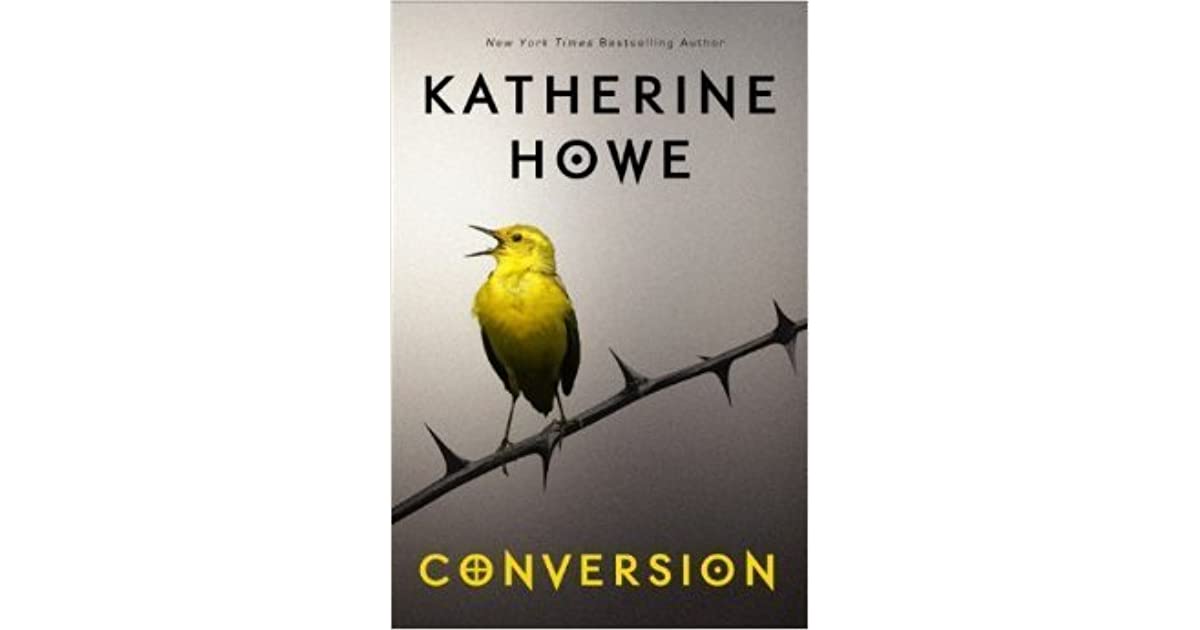
Book Review: Conversion by Katherine Howe


Conversion

by Katherine Howe

Did you know that Danvers, Massachusetts is the village once known as Salem Village?  Salem Village, the site of the Salem witch trials and executions, was renamed Danvers in 1757.

For all of the witchy history, there is very little that seems supernatural in this story until very late in the book. Until then, it is a young adult historical fiction told from the perspective of Colleen, a senior student at the Catholic St. Joan’s school. Interspersed are chapters told from the perspective of Ann Putnam, about ten years after the Salem witch trials, as she confesses to a preacher her part in creating the hysteria by falsely accusing women, caught up in the mania.

I found some parallels between the historical story line and the modern story line, but not as many as I would have liked to see. I think it would have been stronger if she tied the two together a bit more.

It’s an intriguing read. Some of the characterization was good, but some of Colleen’s friends, and her classmates, were a bit one dimensional. The history is the strong point, definitely. For all that happens and how it draws you along, it’s a bit of a slow book. There were some scenes that could have been eliminated to tighten up the pace.

Over all, I enjoyed this book, particularly the dramatized audio reading, but I would say I have liked the other books by this author more. If you’re going to start with something by this author, I would head straight for The Physick Book of Deliverance Dane or the YA The Appearance of Annie Van Sinderen.


Friday, November 5, 2021

Book Review: The Spy - A Novel of Mata Hari by Paolo Coehlo


The Spy – A Novel of Mata Hari

by Paolo Coehlo

Our thematic book club chose the theme of “espionage” for November and I went looking in our digital catalog for books about spies. This led me to The Spy by Paolo Coehlo, translated from the Portugese. I’ve heard many good things about his writing but never read one of his books before. I’m on the bandwagon now and will be reading more by him.

It was a fascinating read, though I think it would have been a trifle easier to follow if I’d gotten the ebook instead of the audiobook. After getting a look at the ebook, it appears that there was some physical formatting that didn’t translate well into the audio. Nevertheless, it was a very interesting listen.

I can’t remember when I first heard of Mata Hari, but I’d always thought of her a spy who was duly executed, but Coehlo paints a rather different picture. He begins with her execution, but then he takes the reader back in time, to when she was known simply as Margaretha Zelle, a Dutch girl.

In her teen years, Margaretha was sexually abused by the principal of her school but afraid to speak up for fear of being sent home. Her parents died when she was just fifteen and she answered an advertisement for a mail order bride, but the man she married turned out to be just as abusive as her former principal. There was also the tragedy of her murdered son.

Things changed when she saw another officer’s wife choose to commit suicide rather than endure the broken marriage. She decided to take her life into her own hands. She became Mata Hari.

Coehlo appears to have done a good bit of research for the book. He presents Mata Hari as someone who traded gossip, not really state secrets. It is offered that she went to the French authorities when the Germans approached her but, in the end, she scape goated over a failed military operation.

Though, of course, there will always be some question of how events really occurred so long ago, I found the way the story was presented singularly effective. I definitely want to read more by Coehlo now.


Friday, June 18, 2021

Book Review: The Hidden Palace by Helene Wecker


The Hidden Palace  

by Helene Wecker

It is not every day that a book of this caliber comes along. I tried to savor it, to read it slowly, really hear the words in my head, but I confess that I stayed up late Sunday night rushing through the ending. If you haven’t read The Golem and the Jinni, I highly recommend you go and read that one before reading this one. I promise you it will be worth it.

You can find my review of the original book here https://storymusing.blogspot.com/2020/04/book-review-golem-and-jinni.html

A quick recap – In The Golem and the Jinni we meet the main characters, Chava Levy, who was created to be a bride for a man who dies on the ocean crossing to America, and the Jinni, Ahmad al-Haidid, who was bound with iron by a wizard and ended up in a flask that was sent to America. Chava and Ahmad meet in New York during the early part of the 20th century. There is a myriad cast of neighborhood characters where Chava lives, where the Jinni lives, and even up town, where Sophia Winston lives.

In this book, we add in Kreindal Altschul, a young woman whose rabbi father creates another golem to take to Europe to help his people, but never has the chance. Kreindal ends up in an orphanage, master of a golem in hiding.

Sophia returns, somewhat changed and continuing to change over the course of the novel as she travels to the Middle East in search of treatments or a cure for her ailment. She comes into contact with a Jinniyeh, who is much like the Jinni was in the beginning, arrogant and a loner, concerned only with her own well-being and needs.

Chava’s friend Anna Blumberg returns with her son, Toby. There are limits to Anna’s friendship with Chava. She knows what Chava is and what she can do, has seen it, and her first priority is always keeping Toby safe, sometimes to his detriment.

Maryam and Sayeed Fadoul, purveryors of a small coffee shop in Little Syria also return, trying to run interference between the people of the neighborhood and the strange power they know Ahmad holds.

Things are a bit tense between Chava and Ahmad now. He's restless and becoming irritable. They tend to debate and squabble just as part of their relationship. They also have very different perspectives of the world, she was literally created to serve while his entire existence is founded on being a creature of whimsy with little natural constraints because of his power. He naturally chafes at the restraints from time to time in this different type of existence.

I've loved every little interlude and vignette that make up the fully realized whole. Wecker is a fantastic story teller. She brings history to life in a fantastical story. Her sidelong description of the Triangle factory fire is heartbreaking as we see how it affects people in the story. The storyline is at once fresh and original, the plot surprising and yet reasonable, so that one thinks, ah, of course that happened, after it happens.

I can’t recommend this book, and the first, highly enough. I look forward to the next one though I fear it will be few years before it is ready.


Friday, February 5, 2021

Book Review: Black Bottom Saints by Alice Randall


Black Bottom Saints

by Alice Randall

A literary historical novel, broken up into chapters based on the everyday “Saints” the narrator, Ziggy Johnson, has known over his years as an important figure himself in the Black Bottom area of Detroit.

“By the end of World War I, Black Bottom was established as a municipality (along with New York’s Harlem and Chicago’s Bronzeville) with a clear claim of being one of the three most economically, politically, and artistically powerful Black communities in America.”

 This novel relates the life of Ziggy Johnson through his interactions with other historic figures, who he refers to as Black Bottom Saints.

“Black Bottom Saints – people who had suffered so much, and so differently, but who had each found a way, or made a way, to experience radical joy.”

One of my favorite chapters is when he shares about Tim Moore, but as a ghost that comes to visit him in his hospital room. Is he hallucinating? Perhaps, but it’s still a very warm recollection of what made that person special to him. He laughs so hard at one point that the nurse threatens to give him a sedative. “When Tim came back later, I told him not to do anything that would make me laugh or cry loud, so we just softly talked over the old days.”

My mind boggles slightly at the concept of writing a book from the perspective of someone who actually existed. It has been done time and again, but as a writer, I can only imagine how difficult it must be to inhabit a person’s mind, to worry about getting it right, sounding authentic. Luckily, the gentleman in question, “Ziggy” Johnson, was a writer himself and so there was already a good record of articles from the newspaper, and even articles specifically about a number of these people.

The author relates the story in the style of a first -person reminiscence, making the story feel like sitting and listening to an old man talk about the most colorful and special people he knew in his life. It’s engrossing, though sometimes confusing at first because of the particular language she uses, I had to look up a few terms.

She really does cover a lot of territory in this book, facets of life, bringing important truths into succinct clarity.

"The war don't end when the last gun is shot," George Stanley said. "That's the end of a battle. The war ends when you stop waking up shaking in the middle of the night. Too many men, Colored Girl, win the boots on the ground war then lose the war in they head when they're back safe in their bed."

The author does a tremendous job of bringing these characters to life. I found myself filled with emotion at the hardships they had gone through and cheering for their successes. I highly recommend this book.


Friday, November 6, 2020

Book Review: Lincoln in the Bardo by George Saunders


This one was recommended to me some time ago and I was looking for something in my Overdrive so I grabbed it.

It’s a very . . . unusual book.

If you don’t know, the Bardo is a state of existence, not totally unlike purgatory, between death and rebirth. The length varies based on when a person died and how they lived.  

The majority of the book takes place in the Washington D.C. graveyard where President Lincoln’s young son, Willie, was initially laid to rest when he died at only ten years of age. The scenes where Willie is dying are particularly effective, interspersed with the forced gaiety of a party given at the White House during the Civil War.

Quotes from real sources of the time and made up quotes are interspersed with no note of which is which. It’s rather disconcerting, but it also serves the function of a sort of Greek chorus, often whispering the thoughts of people surrounding the action. I found myself questioning whether things were real, which can go along with a historical novel where events are imagined around historical events, but also goes along with that surreal feel of describing the actions of ghosts.

There are quotes (real and/or imagined) that blame the Lincoln’s for Willie’s death, saying they were too permissive and he died because he rode his pony in the rain, an idea that persists though we KNOW now that viruses cause colds, not being cold. In fact, he died of Typhoid Fever, a bacterial infection from contaminated food or drink.

Lincoln is drawn to the graveyard to visit his son. His grief is well depicted and put into relation with the terrible weight of having initiated a war, of calling on so many to give up their lives for a purpose. He asks himself over and over whether it is the right thing to do and whether he can see it through.

The characters that populate the Bardo run the gamut of humanity. We hear from different people who had very different experiences in life, some quite hedonistic, and some quite horrific. Slavery, and all the hardships and inhumanity that went with it, are part of the story because of this.

Some of the main characters have physical descriptions that are somewhat humorous and definitely outlandish, and, thankfully, difficult to retain in mind. It is part of the surreal quality of the novel. There is a phantasmagorical feel to all the events. If you can hold on to it loosely and move from piece to piece, you’ll be in good shape.

It is definitely not going to be concrete enough for some people to read. You may feel lost, as in the mist, or a dream. I think that feeling is somewhat intentional. If you are okay with it, as I am, you may enjoy this novel. I did. But it’s definitely not for everyone.


Friday, April 19, 2019

The Muralist by B.A. Shapiro


The Muralist
By B.A. Shapiro

The theme for book club this month was visual arts and I found myself completing an unheard of (for me) third book! It helps that I had them all sitting on my Goodreads list. The third one, The Muralist, by B.A. Shapiro kept me up last night until after midnight because I simply could NOT put it down. I had to finish it.

I feel like I've actually learned a little bit about abstract art appreciation from this novel. The main character is a young abstract painter named Alizee Benoit. Though she is a fictional character, she works with many people in the book who are historical figures including the abstract artists Mark Rothko and Lee Krasner, in the Works Project Administration, the WPA. They paint murals.

Eleanor Roosevelt actually plays a part in the story as Alizee gets to meet her and convinces her to get the administration to fund a couple of abstract murals. Then Alizee contacts her for more personal help.

The book is set in late 1930s and early 40s. Alizee is Jewish and her family is stuck in Europe, her parents having died when she was young in a laboratory explosion. She has not been political but starts working with a group trying to get more visas for immigrants.

It's a very good book but emotionally difficult. Her uncle is detained, leaving the rest of the family on their own, in France and her cousin almost killed. There is little she can do, but she tries. 

Breckinridge Long, the assistant secretary of state in control of all American visas, lies about how many visas were given out, being anti-Semitic and an isolationist. Alizee sets to work with a group determined to discredit him, even as she begins to create murals that speak to her fear for her family in France.

However, the story begins in modern times with a niece of Alizee, Danielle, as she tries to piece together what happened to her aunt, who disappeared in the early 1940s. Danielle’s story is quickly dwarfed by that of Alizee as we are pulled into the years before the involvement of the U.S. in World War II.

This was a deeply engaging and moving book. Characters are well developed and the story is fast paced while giving deep and interesting details. I will be looking for more of this author’s work in the future. I would give it 5 stars.

Wednesday, March 1, 2017

Song of Achilles: A Novel by Madeline Miller


Song of Achilles: A Novel
By Madeline Miller

This book was at once lyrical and heart rending. Not so much for how it ended, we knew how that was going to go, but for the intervening story of love and loss. I can well understand why it took her ten years to write the book. The historical accuracy, the beautiful phrasing and exquisite detail must have demanded it.

Patroclus says he was nothing special when he was born. “Quickly, I became a disappointment: small, slight. I was not fast I was not strong. I could not sing. The best that could be said of me was that I was not sickly.”

His father attempts to marry him off to Helen of Troy but ends up getting him pledged to “uphold Helen’s choice, and defend her husband against all who would take her from him.”

Then Patroclus accidentally kills an older boy, who is bullying him, simply by pushing him away. The boy trips, falls and hits his head.

“I would be exiled, and fostered in another man’s kingdom. In exchange for my weight in gold, they would rear me to manhood. I would have no parents, no family name, no inheritance. In our day, death was preferable. But my father was a practical man. My weight in gold was less than the expense of the lavish funeral my death would have demanded. This was how I came to be ten, and an orphan. This is how I came to Phthia.”

The passages of even simple events are exquisitely descriptive. “That night I dreamed of the dead boy, his skull cracked like an egg against the ground. He has followed me. The blood spreads, dark as spilled wine. His eyes open, and his mouth begins to move. I clap my hands over my ears. The voices of the dead were said to have the power to make the living mad.  I must not hear him speak.”

Patroclus does not have an easy adjustment to his new home but he is fascinated by Achilles.

“Juggling was a trick of low mummers and beggars, but he made it something else, a living pattern painted on the air, so beautiful even I could not pretend disinterest.”

The juggling of figs - such an important scene, mesmerizing, exactly how it feels to be caught in the grasp of fascination with another. A connection is made.

 “His gaze, which had been following the circling fruit, flickered to mine. I did not have time to look away before he said, softly but distinctly, “Catch.” A fig leapt from the pattern in a graceful arc towards me. It fell into the cup of my palms, soft and slightly warm. I was aware of the boys cheering.”

Achilles claims Patroclus for his constant companion and their friendship grows, deepening.

“I saw then how I had changed. I did not mind anymore that I lost when we raced and I lost when we swam out to the rocks and I lost when we tossed spears or skipped stones. For who can be ashamed to lose to such beauty? It was enough to watch him win, to see the soles of his feet flashing as they kicked up sand, or the rise and fall of his shoulders as he pulled through the salt. It was enough.”

The boys are separated by Achilles mother, a sea-nymph who wants Achilles to be a god though she doesn’t yet know how but she will make that happen. She sends Achilles off to be taught by the centaur, Chiron. Patroclus follows and Chiron agrees to shelter and teach them both.

“Dinner was more stew, and a thin type of bread that Chiron cooked on bronze sheets over the fire. For dessert, berries with mountain-gathered honey. As the fire dwindled, my eyes closed in half-dreaming. I was warm, and the ground beneath me was soft with moss and fallen leaves. I could not believe that only this morning I had woken in Peleus’ palace. This small clearing, the gleaming walls of the cave within, were more vivid than the white palace had ever been.”

It is an idyllic time, as the boys learn everything Chiron has to teach them. Achilles is most interested in music and Patroclus eventually asks to learn what Chiron can teach him of medicine.

As they grow into adulthood, Patroclus and Achilles’ friendship turns into a passionate romance, though it is very delicately handled by the author. The question of the nature of their relationship has been hotly debated since ancient times and this version of the story is beautifully told.

There is a lifetime packed into this one book and it feels like it at times, certain events are glossed over. The war goes on for years, but the author draws you on. The break between Achilles and Patroclus over Achilles pride is difficult to read but a sign of how well the author draws the reader into the story.


I highly recommend this book, it is one of the best I have read in years.